And how to fix them without spending a fortune.
Ever walk into a room in your own home and think, Something just isn’t right?
You’ve bought the furniture. You’ve hung some artwork. You’ve probably spent more money at HomeGoods than you’d care to admit.
But somehow, the room still doesn’t feel finished.
Here’s the thing: A beautiful home isn’t necessarily about having more stuff. It’s about knowing what to do with the stuff you have.
As an interior designer, I see the same handful of decorating mistakes over and over. And the good news? Most of them are surprisingly easy to fix.
Let’s talk about five of my favorites.
1. Your Rug Is Too Small
Oh, the dreaded postage-stamp rug.
You found the perfect color, the perfect pattern, and the perfect price. Unfortunately, it’s floating in the middle of your living room like a tiny island.
A rug should anchor your furniture, not look like it’s trying to escape from underneath the coffee table.
The fix: In most living rooms, aim for a rug large enough that at least the front legs of your sofa and chairs sit on it.
An 8’ × 10’ or 9’ × 12’ often works better than a 5’ × 7’, depending on your room and furniture layout.
And yes, I know larger rugs cost more. But one properly sized rug can make a bigger difference than five new throw pillows.
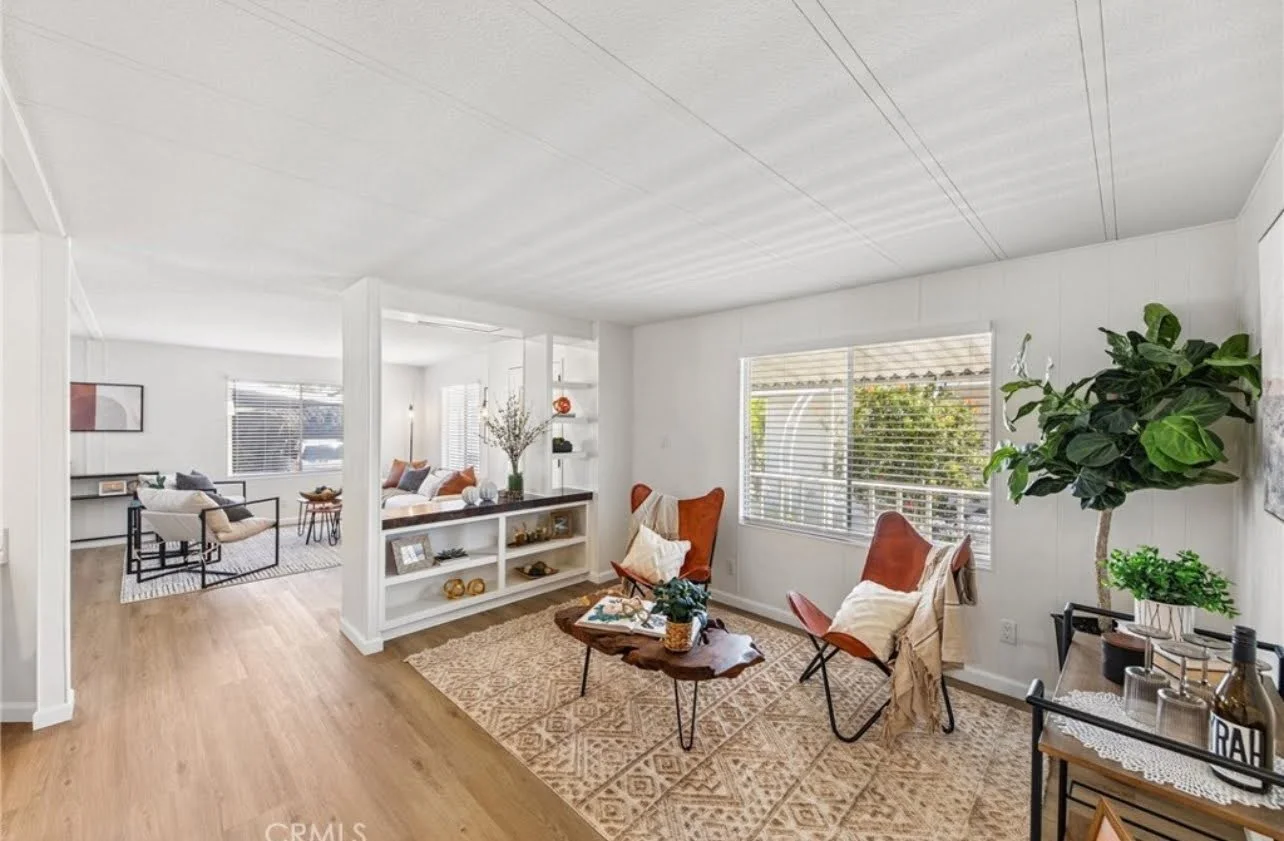
A rug that’s too small can make an entire seating area feel disconnected. The right size brings everything together.
2. Your Artwork Is Practically Touching the Ceiling
Somewhere along the way, we collectively decided artwork should be hung really, really high.
I’m not sure who started this, but I’d like a word.
Artwork should connect visually with the furniture and architecture around it.
When it’s floating halfway to the ceiling, everything feels disconnected.
The fix: A common guideline is to hang artwork with its center approximately 57–60 inches from the floor.
But here’s where design judgment comes in.
If you’re hanging artwork above a sofa, console, or headboard, its relationship to the furniture matters more than following a measurement religiously.
And please, don’t hang one tiny picture over a giant sofa.
Scale matters!
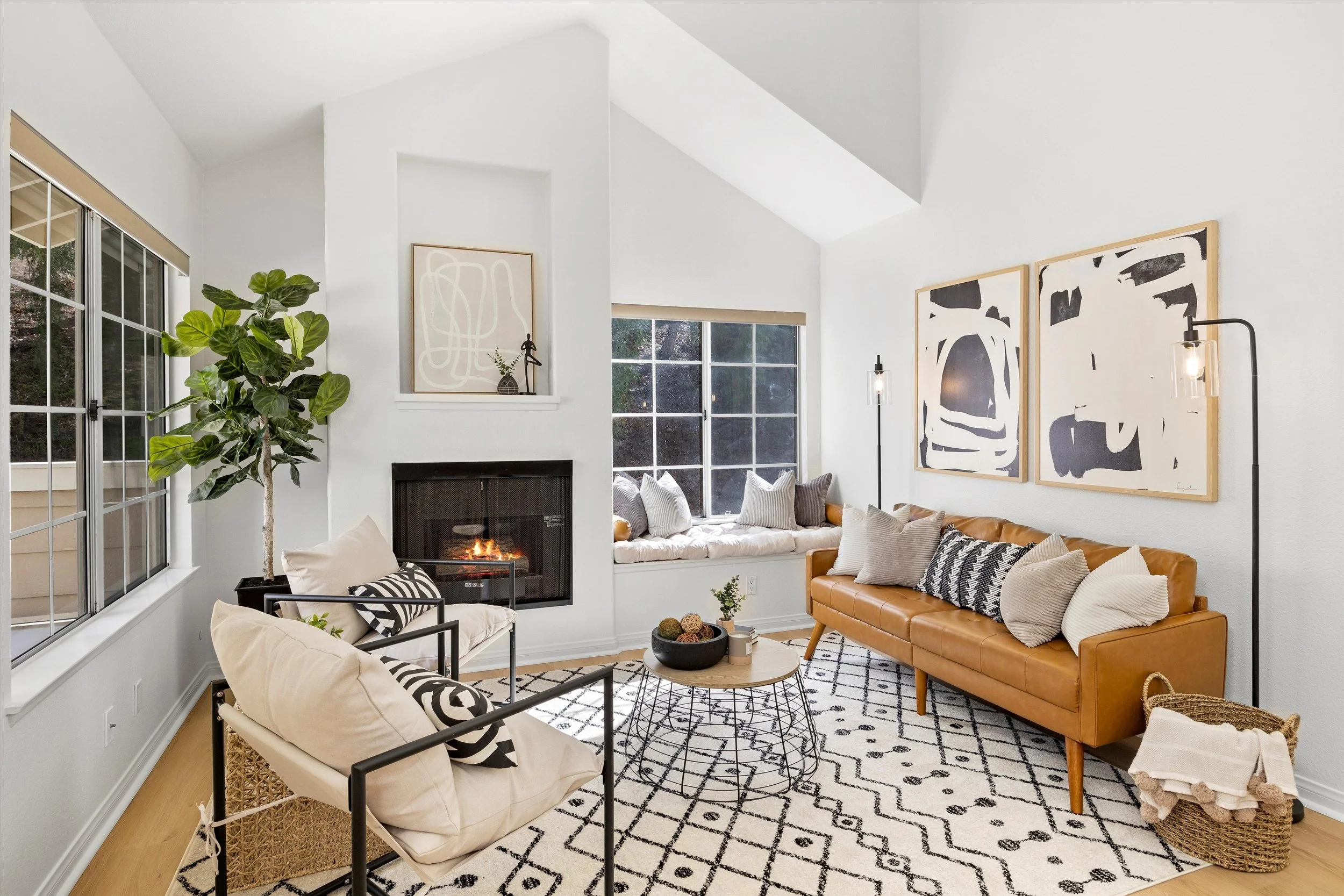
Artwork should feel connected to the furniture beneath it, not float toward the ceiling. Proper placement and scale make all the difference.
3. All Your Furniture Is Hugging the Walls
I call this the middle-school-dance approach to furniture placement.
Everybody’s standing around the perimeter, and nobody wants to move toward the center.
Pushing every piece of furniture against the walls doesn’t automatically make a room feel larger.
Sometimes it just creates a giant, awkward empty space in the middle.
The fix: Think about conversation areas rather than wall space.
Try pulling your sofa away from the wall, angling a chair toward it, or creating a more intimate seating arrangement.
Even moving furniture a few inches can make a surprising difference.
And don’t forget about traffic flow. Nobody wants to navigate an obstacle course to reach the kitchen.
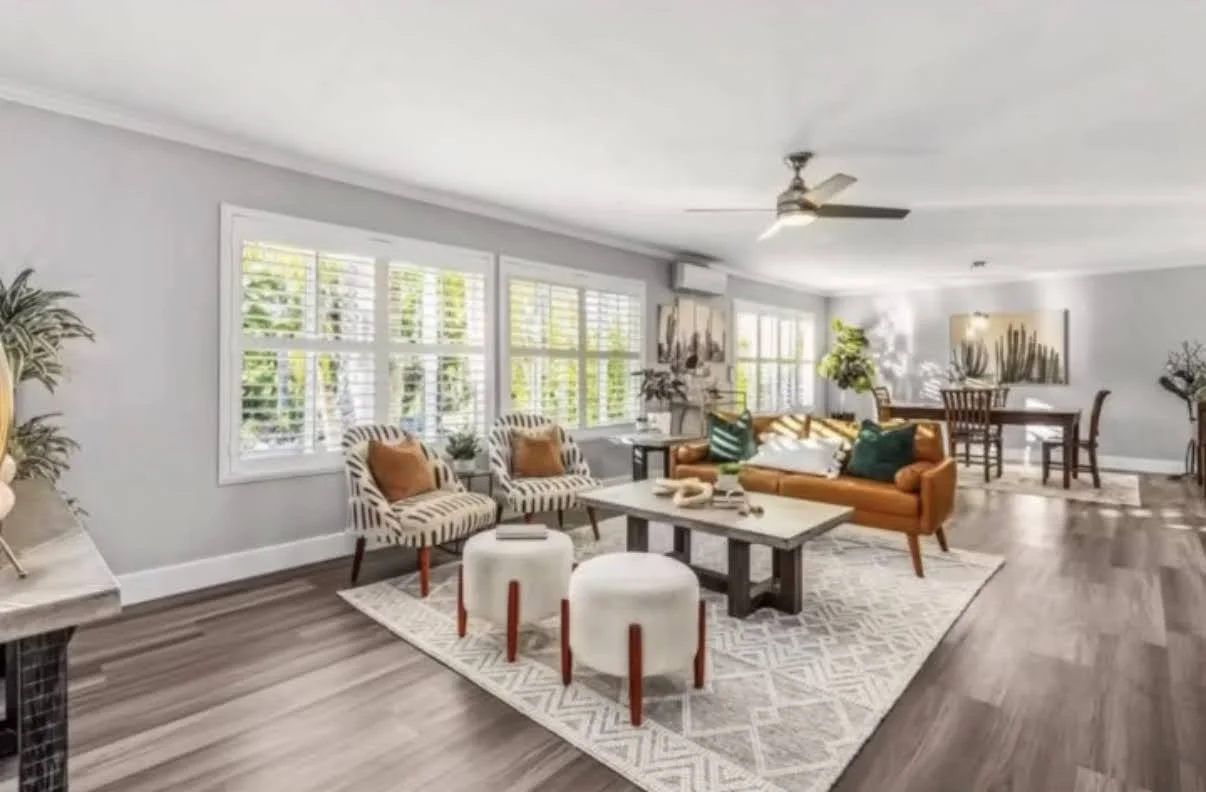
No middle-school dance vibes here! Pulling furniture away from the walls creates inviting conversation areas, better flow, and a room that feels intentionally designed.
4. You’re Relying on One Sad Ceiling Light
Overhead lighting has its place.
But if your entire living room depends on one ceiling fixture, you’re missing an opportunity to create warmth and atmosphere.
Lighting is one of the most overlooked elements of interior design.
And one of the most transformative.
The fix: Layer your lighting.
Think table lamps, floor lamps, sconces, and accent lighting.
Different light sources create depth and make a room feel more inviting.
I also love warm lighting in living spaces. Generally, bulbs around 2700K–3000K create a cozy atmosphere without making everything look yellow.
And if you can put your lights on dimmers?
Even better.
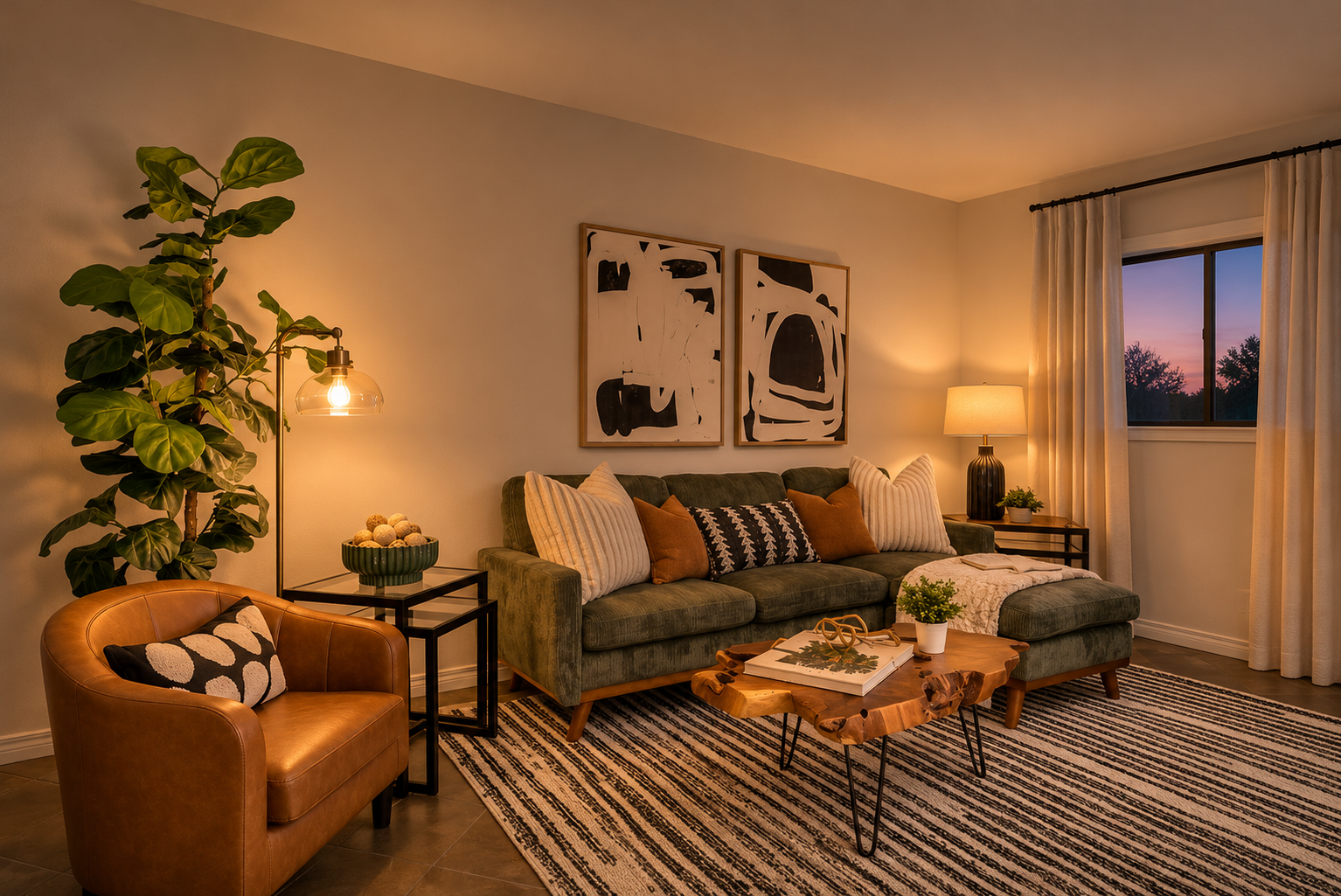
Layered lighting transforms a living room from ordinary to inviting. A little warm light goes a long way.
5. Everything Matches. And I Mean EVERYTHING.
The matching sofa and loveseat.
The matching end tables.
The matching bedroom furniture set.
The matching lamps.
I promise, your home does not need to look like you purchased the entire furniture showroom display.
In fact, I’d rather it didn’t.
The most interesting interiors feel collected over time. They have personality. They mix materials, finishes, textures, and sometimes even design styles.
The fix: Stop worrying about whether everything matches and start thinking about whether everything works together.
Mix wood tones. Pair something vintage with something modern. Introduce an unexpected color. Keep the pieces you genuinely love, even if they aren’t part of a matching set. A room can feel cohesive without being predictable.
And that’s where the fun begins.
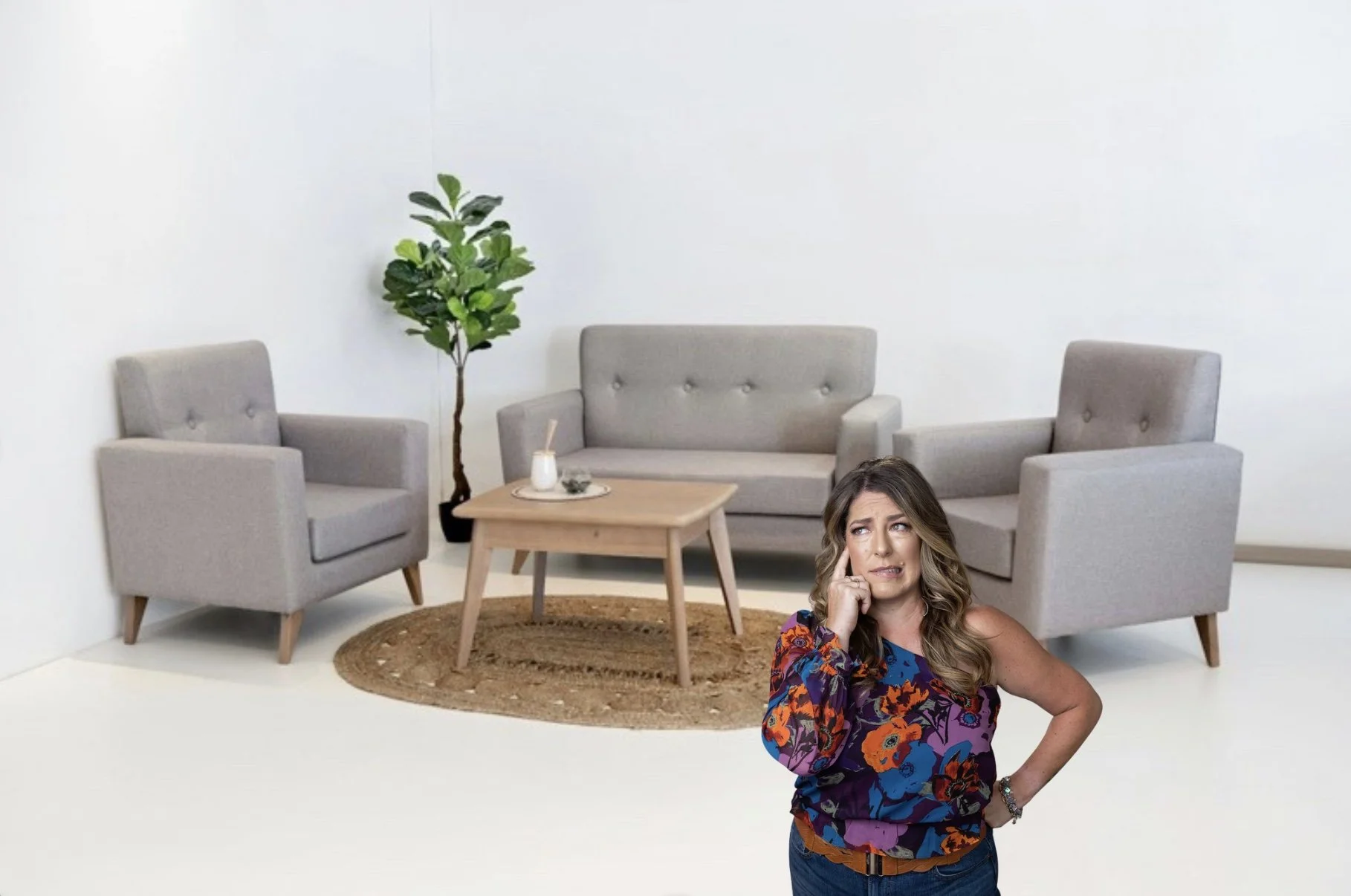
When everything matches a little TOO perfectly. Your home should have personality, not look like you bought the entire furniture showroom display!
Here’s the Part I Really Want You to Know
You don’t need a million-dollar budget to have a beautifully designed home.
You don’t need to replace everything you own.
And you definitely don’t need to follow every decorating trend that comes across your Instagram feed.
Sometimes the biggest transformation comes from rearranging what you already have, changing a few accessories, or finally figuring out why that one room has never felt quite right.
Good design isn’t about how much you spend. It’s about making intentional choices.
And it’s absolutely possible to create a home that feels beautiful, comfortable, and completely yours.

Life’s too short for boring rooms! Your home should reflect your personality, your style, and everything that makes you YOU. That’s where the fun of interior design begins.
Your Home Should Feel Like YOU.
At Haus of Heidi, I believe interior design should be approachable, personal, and actually fun.
Whether you’re ready for a complete room transformation or just need a professional eye to help pull everything together, I’d love to help.
Because you deserve to love where you live.
Let’s reimagine your Haus.